

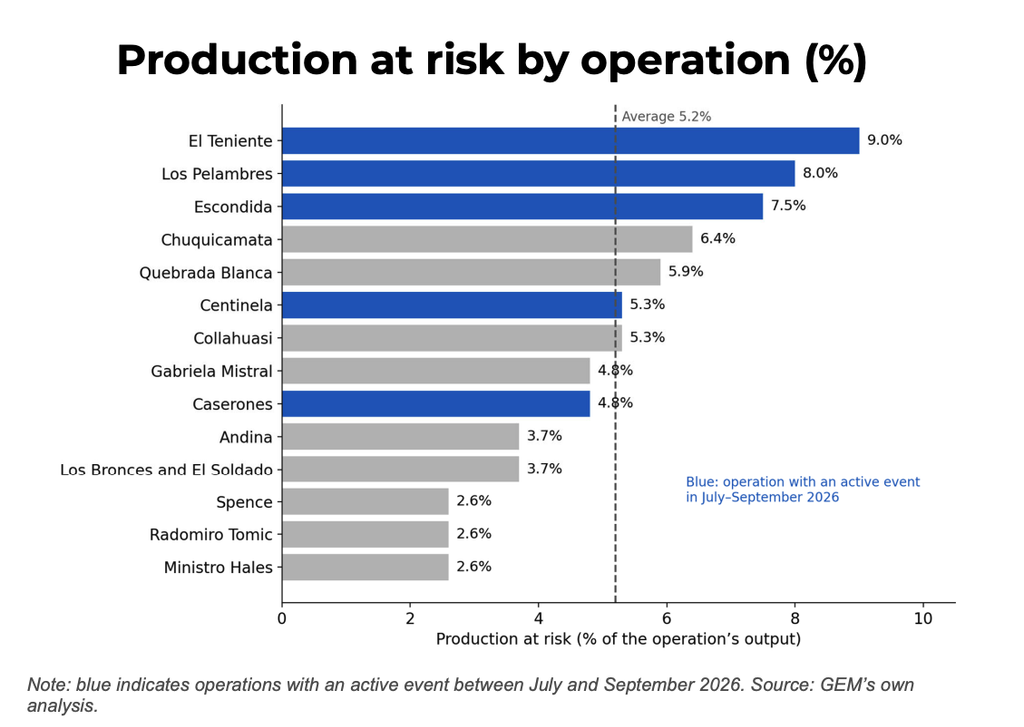
Strikes, severe weather, accidents and geological problems put an average 5.2% of production at Chile’s largest copper mines at risk, according to a new assessment that suggests almost one in 10 tonnes could be vulnerable at the country’s most exposed operation.
GEM Mining Consulting’s first Production-at-Risk Index assessed 14 major copper operations across eight threats, with scores ranging from 2.6% to 9%. El Teniente ranked highest at 9%, followed by Los Pelambres at 8% and Escondida at 7.5%. Nine operations carry at least one risk rated high.
The results come after a turbulent few months for the world’s largest copper-producing country. Workers at Antofagasta’s (LON: ANTO) Centinela began an indefinite strike this week, BHP’s (ASX: BHP) Escondida shut after a fatal accident and storms disrupted Los Pelambres and Caserones . Codelco also suspended its Andes Norte project at El Teniente over deep seismic risks.
The index attempts to quantify a problem that production forecasts can obscure: mine plans generally assume operations proceed largely as expected, even though labour disputes, weather, accidents, geology and processing problems routinely interrupt output.
Chile produced 9.3% less copper from January through July than during the same period in 2025, while July output sank to its lowest monthly level since 2011, the Santiago-based consultancy said.
